The materials I work with.
There are a particularly large number of materials used in jewelry making. Most of the time, people think of gold, silver, and other metals, but contemporary jewelry opens up even more possibilities.
My jewelry is often made of several materials that complement and enhance each other. Here are the materials I use most often:
Polymer clay
It's my preferred medium. I've been working with this material since 2005. Polymer clay is a medium in the plastic family and essentially contains PVC.
It comes in the form of malleable blocks of different colors. The clay in its raw state will be worked before being fired. This firing (or these firings) will make the material rigid. This polymerization allows for the creation of parts that are resistant to shocks and the many everyday aggressions.

I essentially work with black and white polymer clay. For me, it’s a base onto which I add color. For this, I use mixed media mediums and techniques.
I often protect polymer clay with resin, which makes the decoration shiny. That said, a lot of my jewelry contains matte polymer clay decoration. This decoration, even though it may not be visible, is also protected by a thin layer of liquid polymer.
WOOD
I primarily use solid woodWalnut, Cherry, Mahogany, Boxwood, PearwoodAfter cutting the wood (I use a laser cutter), it is sanded using increasingly fine grits, then protected in several layers with an oil specifically intended for contact.
I also create jewelry from veneered wood: in this case, I use thin layers of wood glued onto a «core,» meaning a less precious piece of wood. This is the principle of plywood. I either use pre-made veneer that I buy (bamboo, maple) or I make the veneer myself, and in that case, I like to veneer both sides with two different types of wood, which allows me to have reversible jewelry.

I also sometimes use compressed wood, also called MDF. I paint it directly or glue on paper that has been previously decorated by hand. MDF is made of wood fiber and synthetic binder.
BRASS
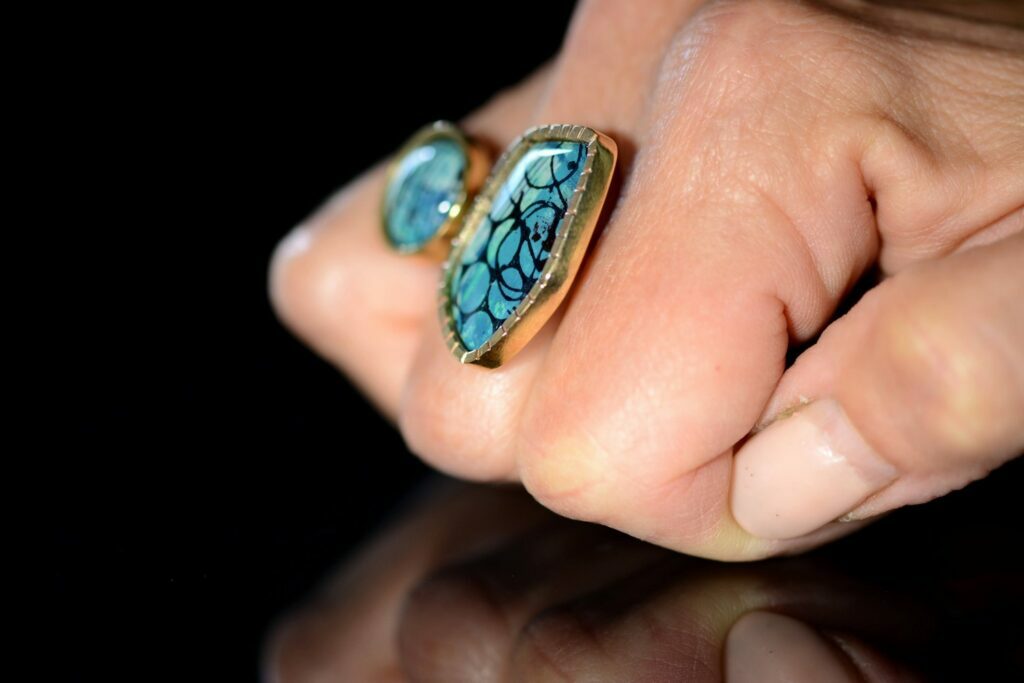
I use brass first title That is to say, it does not contain nickel or lead. Brass is an alloy of copper and zinc. I work this metal from simple sheets and wires of different thicknesses that I will shape, solder, sand, polish...
Primarily containing copper, brass is a metal that will tarnish over time (this is due to oxidation), especially if it is not worn often.
Sterling Silver 925
Pure silver is too malleable to be used in jewelry, which is why we typically work with an alloy: we add another metal to make it more durable. 925/1000 silver is therefore composed of 92.51% pure silver and 7.51% of another metal (usually copper).
Just like brass, I work from sheets and wires that I saw, shape, file, solder, sand, and polish.
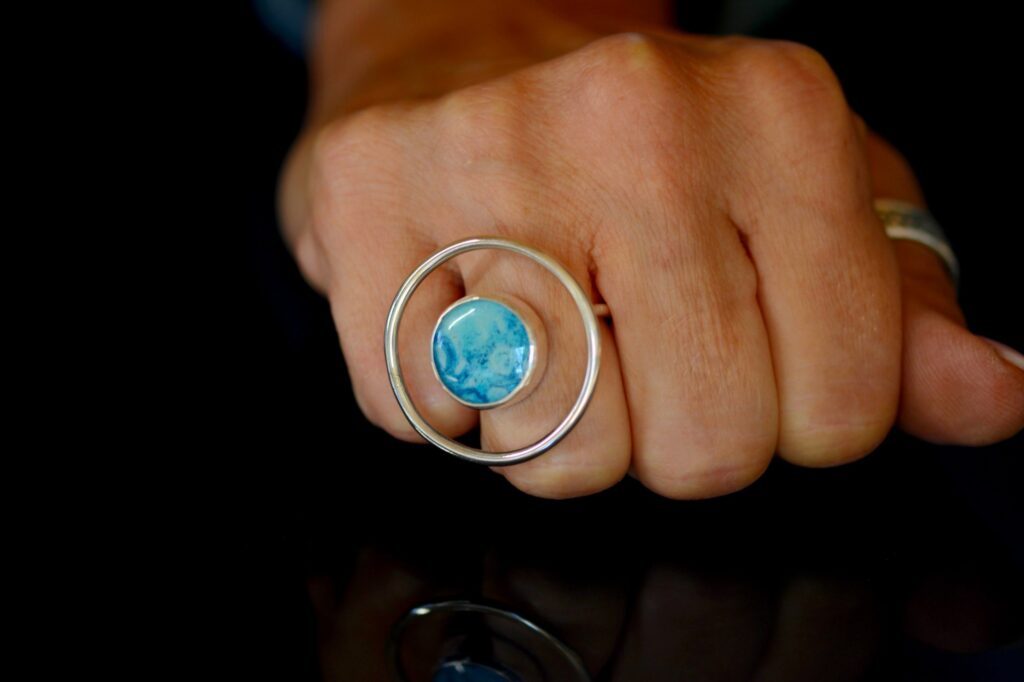
Silver is a metal that can oxidize depending on the skin's pH or when exposed to air. This is particularly true when it is not worn often. All my silver jewelry is guaranteed by my maker's mark (also called a master's mark). If they weigh more than 30 grams, they also bear the State guarantee mark.
UV RESINS
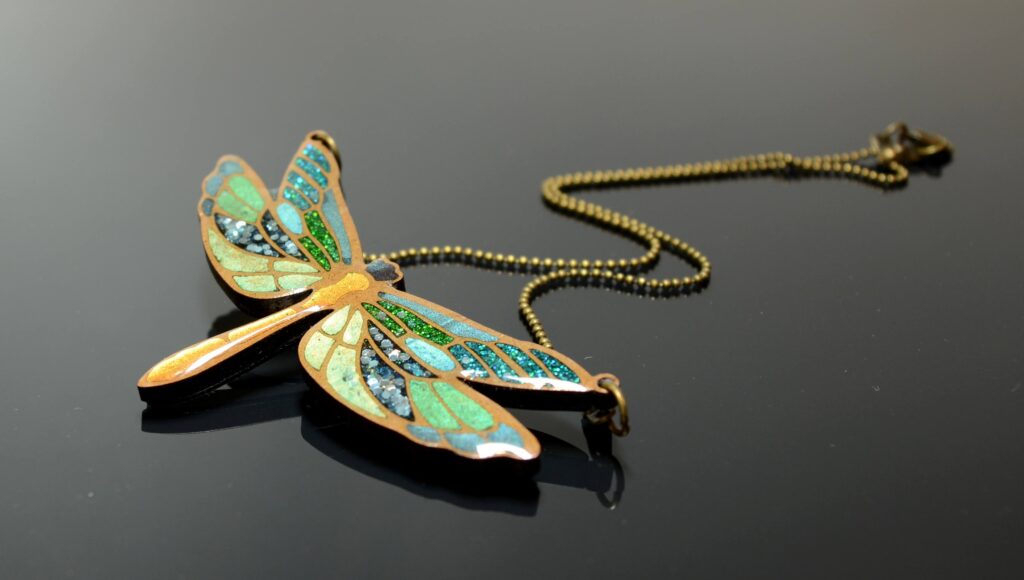
It polymerizes under UV rays (sunlight can be enough, but the process is slow, which is why I use a UV lamp). Most often, I use this resin to protect a surface and to add depth to a decoration.
STAINLESS STEEL
I use stainless steel, particularly for making earring hooks. Stainless steel is a very strong, durable metal that doesn't rust or oxidize. In wire form, I use 316L stainless steel, also called surgical steel, which is known to be hypoallergenic. When I buy stainless steel findings, I prioritize 316L when I can find it. Otherwise, I use 304, another stainless steel used in jewelry making.
I prefer stainless steel in its original color because I know its appearance won't change over time. But I also use gold-plated stainless steel. In that case, you should know that like any plating, the color will change as the plating wears down.
How to care for your jewelry
It is important to me to offer jewelry that is easy to wear and resistant over time, but if you wish to keep your jewelry in its original condition for as long as possible, it is essential to care for it properly.
Advice valid for any subject:
Specific advice for:
Brass and silver
These 2 metals oxidize over time. Plating can stop the oxidation (for a time only), but I have chosen to use them in their natural state in my jewelry. You can restore their shine by rubbing them with a soft, used toothbrush and toothpaste. Rinse them and dry them with a microfiber cloth or a polishing cloth. I notice that oxidation is less visible on jewelry that is worn often; this is because they will be naturally «polished» by various frictions. This is particularly true for rings.
Wood
I treat the wooden elements of my jewelry with a special protective oil suitable for contact use. Despite this protection, wood remains a delicate material. It is therefore important to avoid impacts and to take care not to place other objects on the wood that could cause scratches. (Store jewelry containing wood in a separate pouch away from your other jewelry pieces.) Wood does not require any special maintenance, but for earrings, you may gently wipe away any traces of foundation or makeup using a microfiber cloth with a small amount of cleansing milk.
polymer clay
This material does not require any special care. If needed, a simple cleaning with soap and a soft toothbrush is enough to remove dirt or makeup marks (such as foundation traces on earrings).