WHICH MATERIAL IS BEST FOR A STAMP?
My Experience After Years of Working with Polymer Clay
When you first start working with polymer clay, you quickly discover the wide variety of stamps, texture sheets, and texture plates available. Today, there are many different options to choose from, including rubber stamps, clear silicone stamps, 3D-printed textures, and engraved PMMA plates.
With so many options available, one question often arises: Which material is right for your needs?
The answer is simple: there is no perfect material for every application. Each option has its own strengths and limitations. Over the years, I have learned to use different materials depending on the result I want to achieve.
Not All Stamps Are Made for the Same Purpose
Whether you work with paper, soap, ceramic clay, or polymer clay, each material comes with its own set of requirements.
For some projects, I need absolute precision. For others, I prioritize the quality of the impression or the depth of the texture.
That’s why I mainly rely on two different materials today: PMMA for custom signature stamps and rubber for textures intended for polymer clay.
PMMA: The Ideal Material for Highly Detailed Signature Stamps
PMMA (more commonly known as acrylic or Plexiglas®) is a rigid material that is widely used for laser engraving.
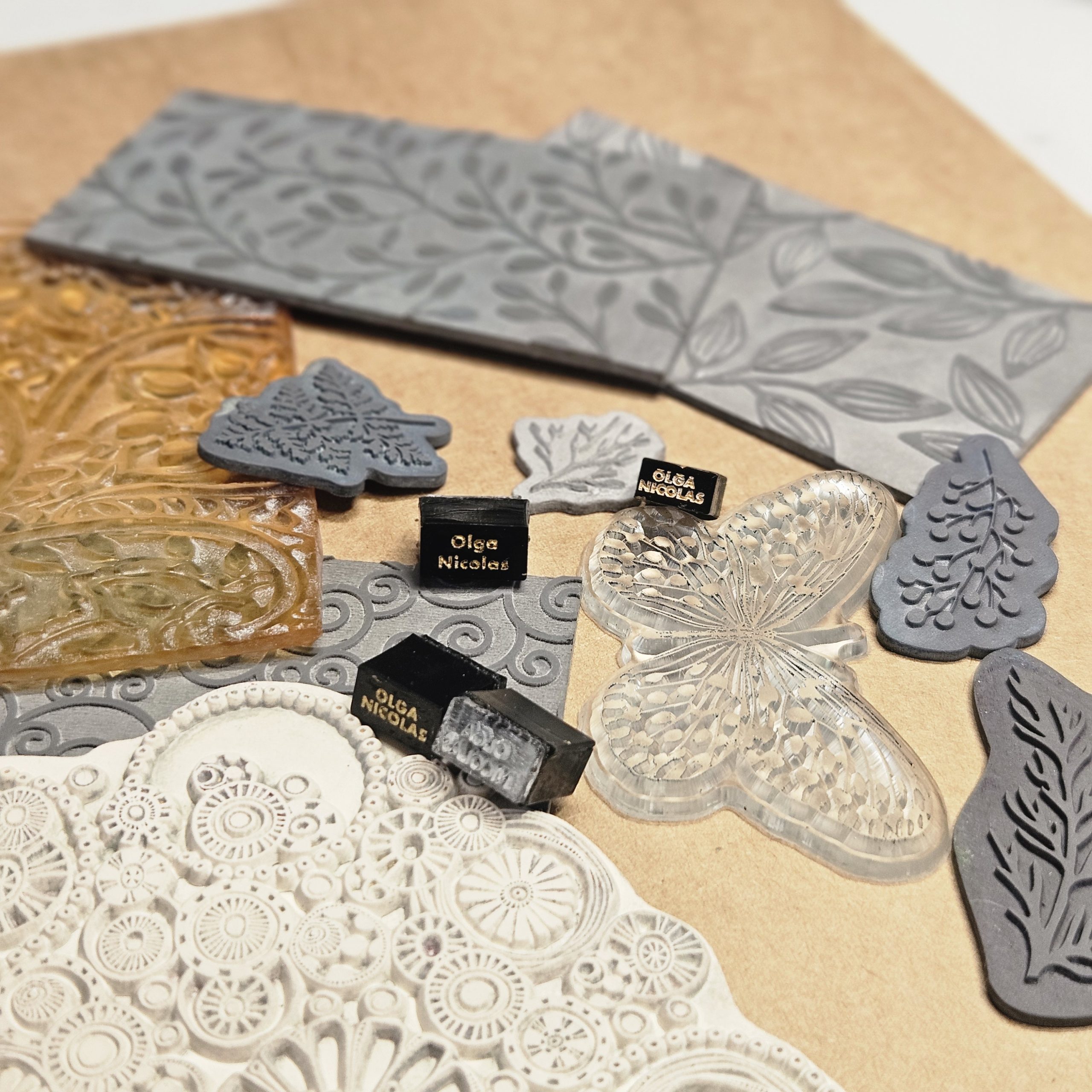
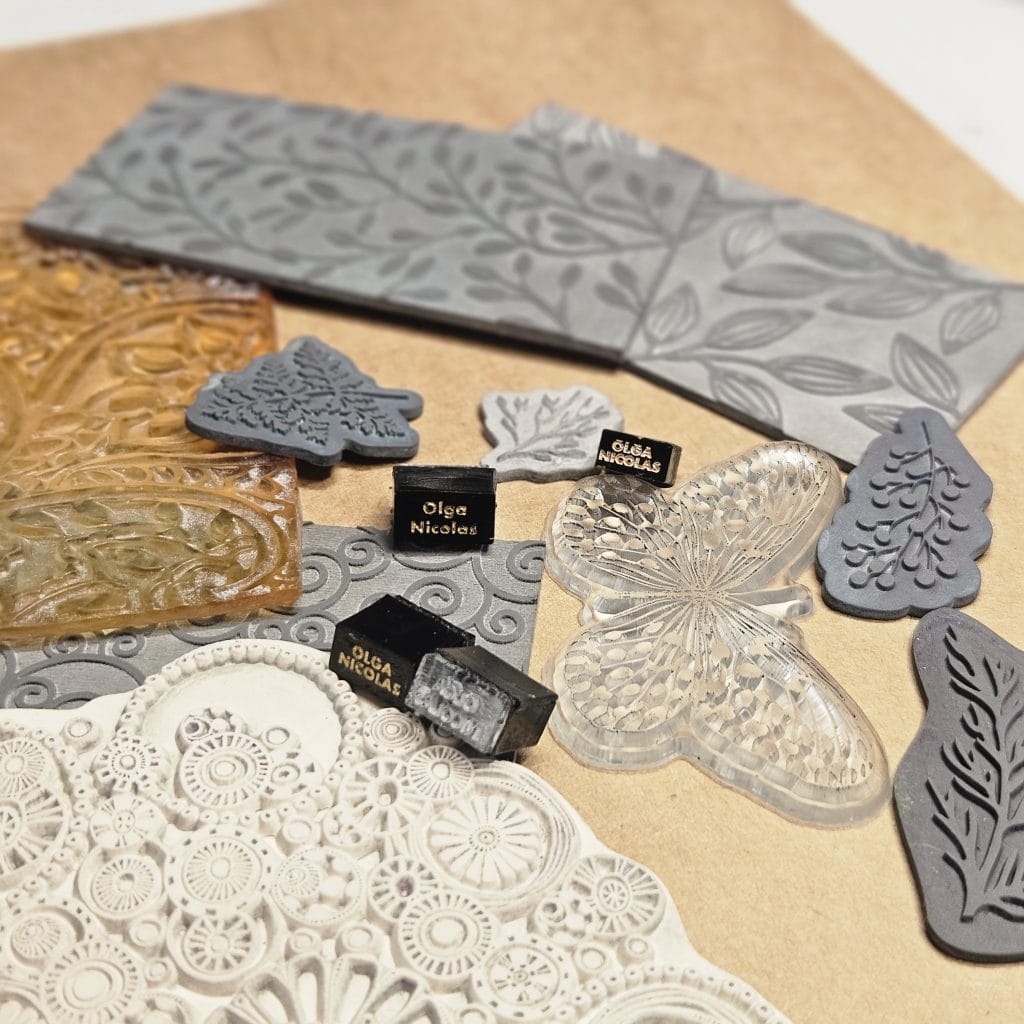
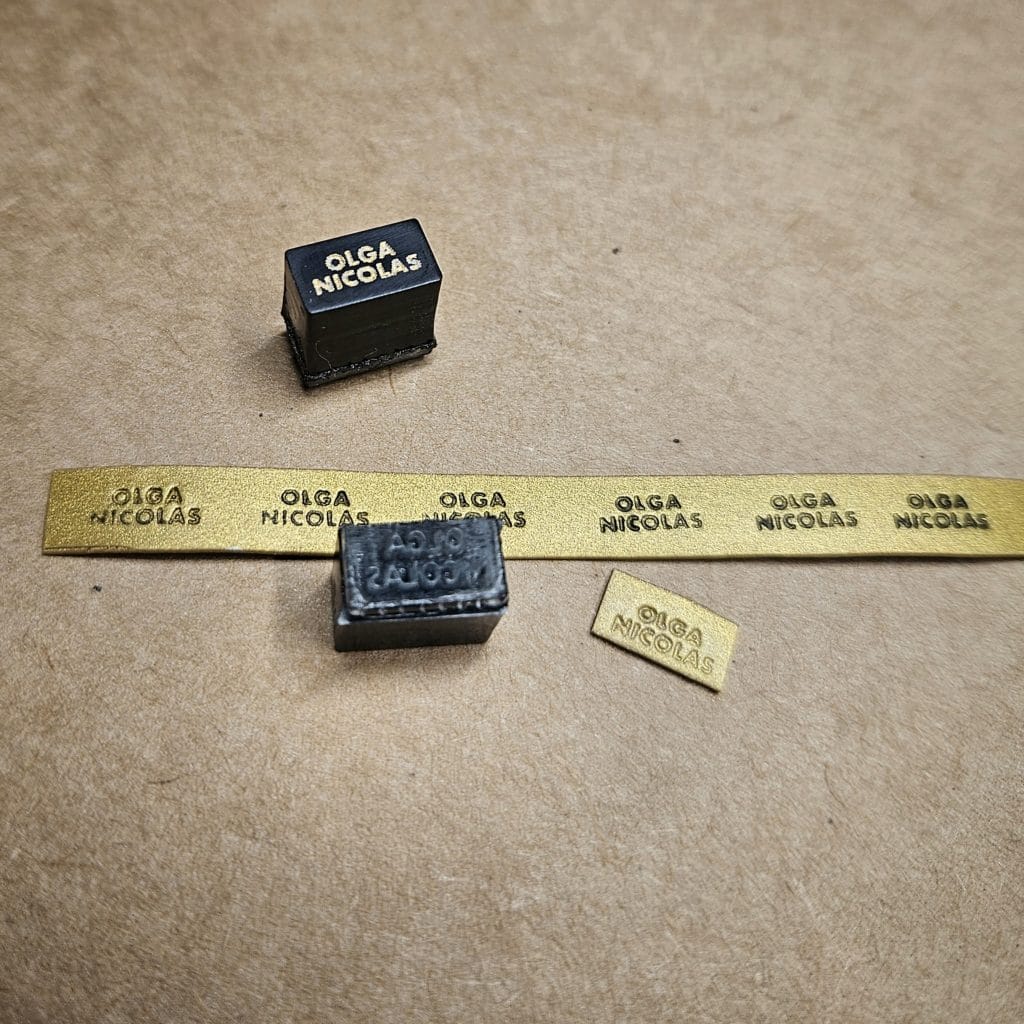
I primarily use it when clients ask me to create a custom signature stamp.
Examples include:
- a logo
- initials,
- signature
- or a maker's mark applied to the back of a piece of jewelry.
The main advantage of PMMA lies in its rigidity and exceptional level of precision. It can capture extremely fine details, even on very small surfaces.
The stamps I create can be made small enough to discreetly sign the back of an earring. At that scale, precision is crucial, and PMMA performs exceptionally well.
PMMA is also an excellent choice for marking other malleable materials such as clay or soap, where sharp impressions and finely rendered details are highly valued.
Rubber: My Preferred Material for Polymer Clay Textures
For decorative textures, rubber is without hesitation my preferred material.
It's also a very enjoyable material to work with on a daily basis because:
- it reproduces even fine details with great accuracy;
- it is highly durable and very easy to clean and maintain;
- it creates deep, clearly defined textures that remain consistent even after many uses.
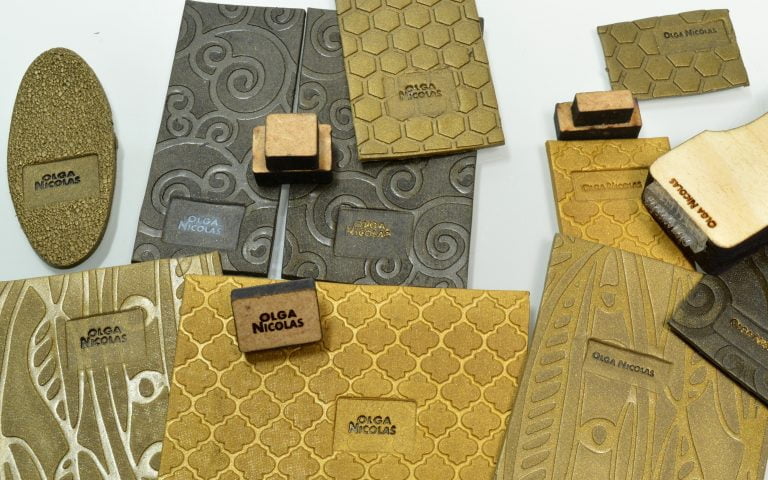
That is why all of the decorative stamps I create are laser engraved and cut from rubber.
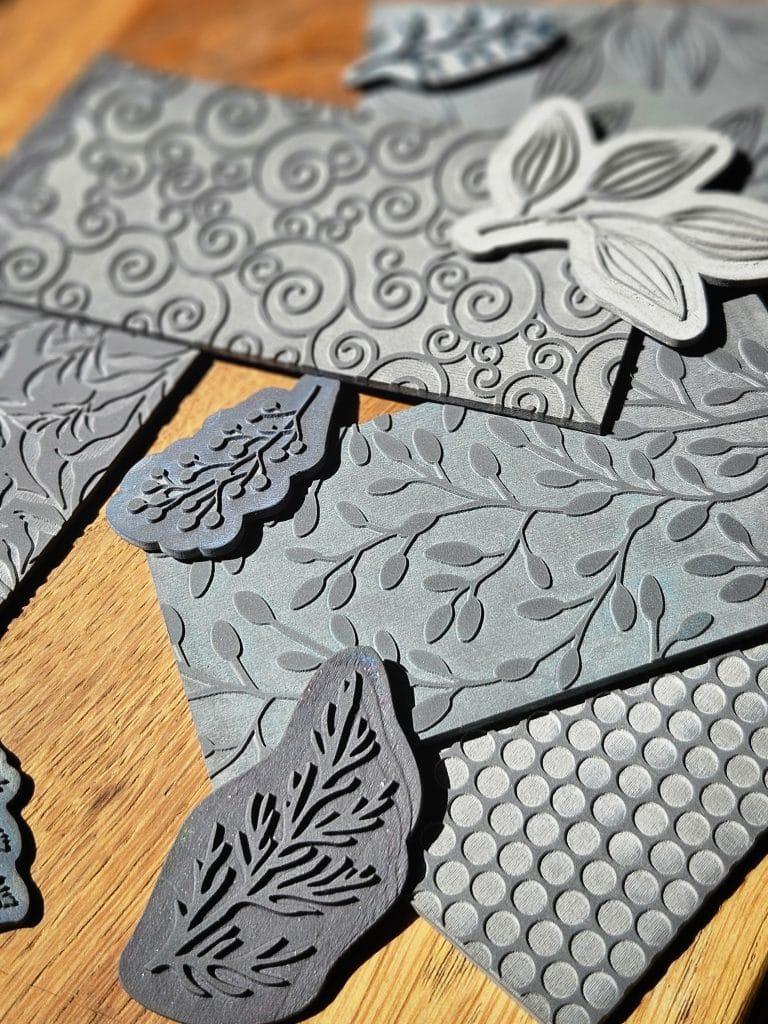 All of my designs are first created with polymer clay in mind, then engraved into rubber to ensure the best possible results.
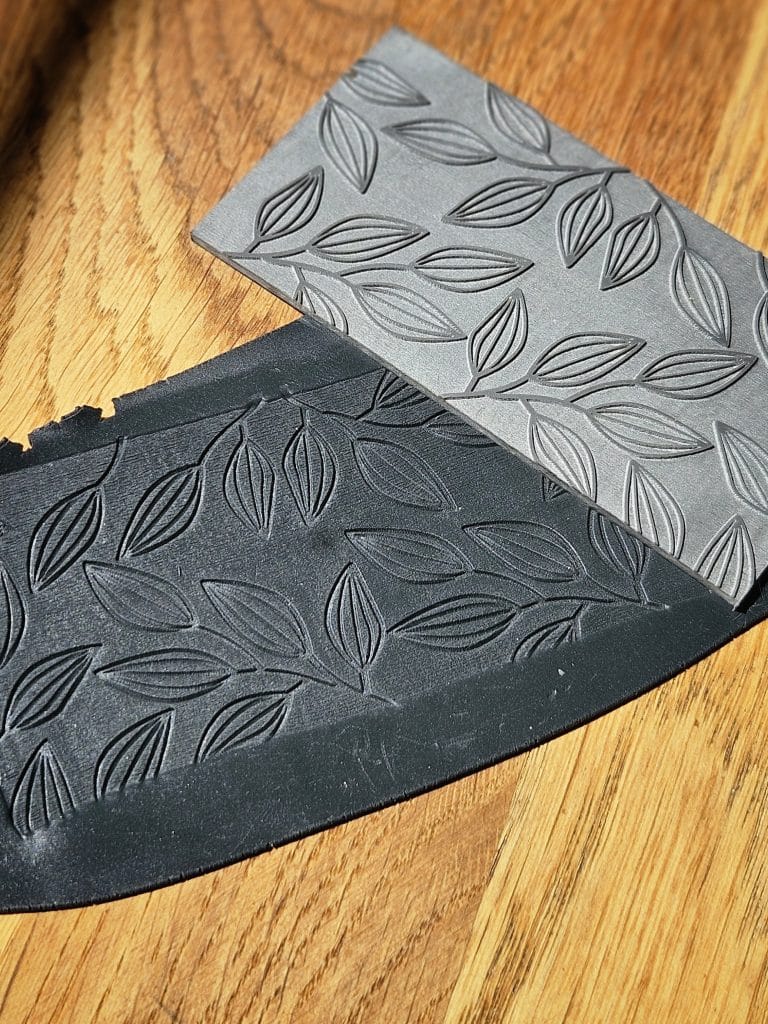 A deep, consistent texture created using a rubber stamp..
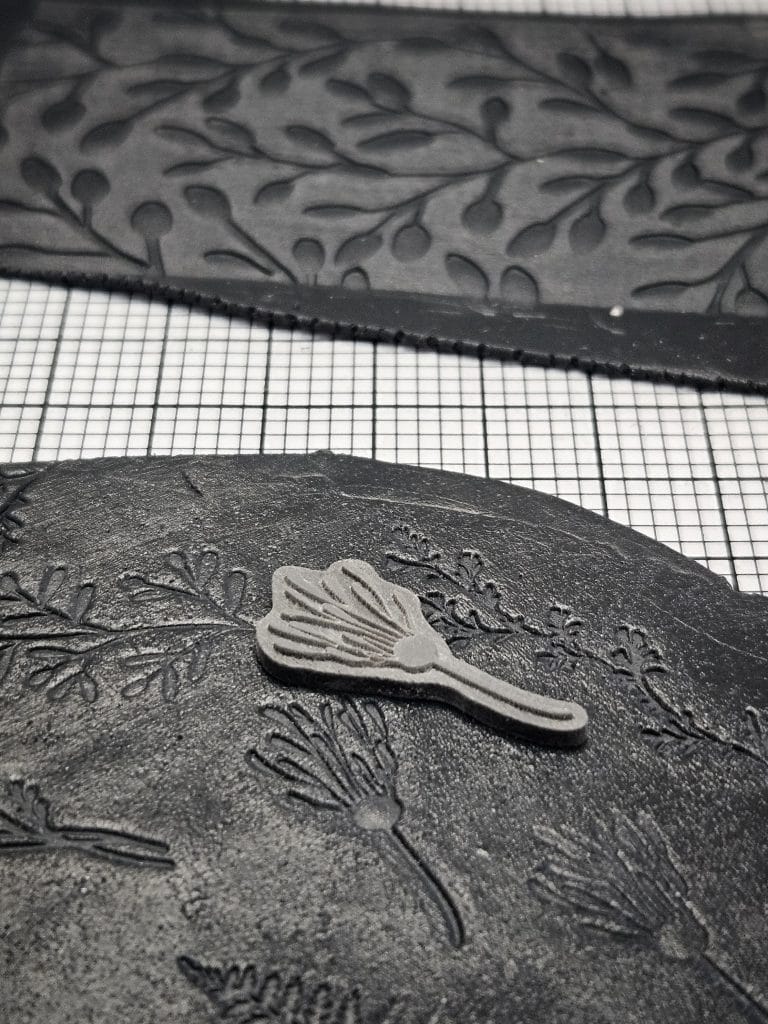 Smaller stamps offer even greater freedom when creating compositions.
This process allows me to create my own designs and, above all, to adjust their depth, proportions, and fine details specifically for use with polymer clay.
A design that works beautifully on paper or with ink will not always produce the same results when used to texture a sheet of polymer clay.
Clear Silicone Stamps: Ideal for Certain Uses
Transparent silicone stamps, often referred to as “clear stamps,” are very popular in the world of scrapbooking.
Their main advantage is that their transparency allows for precise placement of the design.
They are particularly well suited for:
- ink-based techniques;
- paper crafting and scrapbooking;
- handmade cards;
- light decorative work.
When it comes to polymer clay, they can certainly be used as well, particularly on baked clay for ink-based printing techniques.
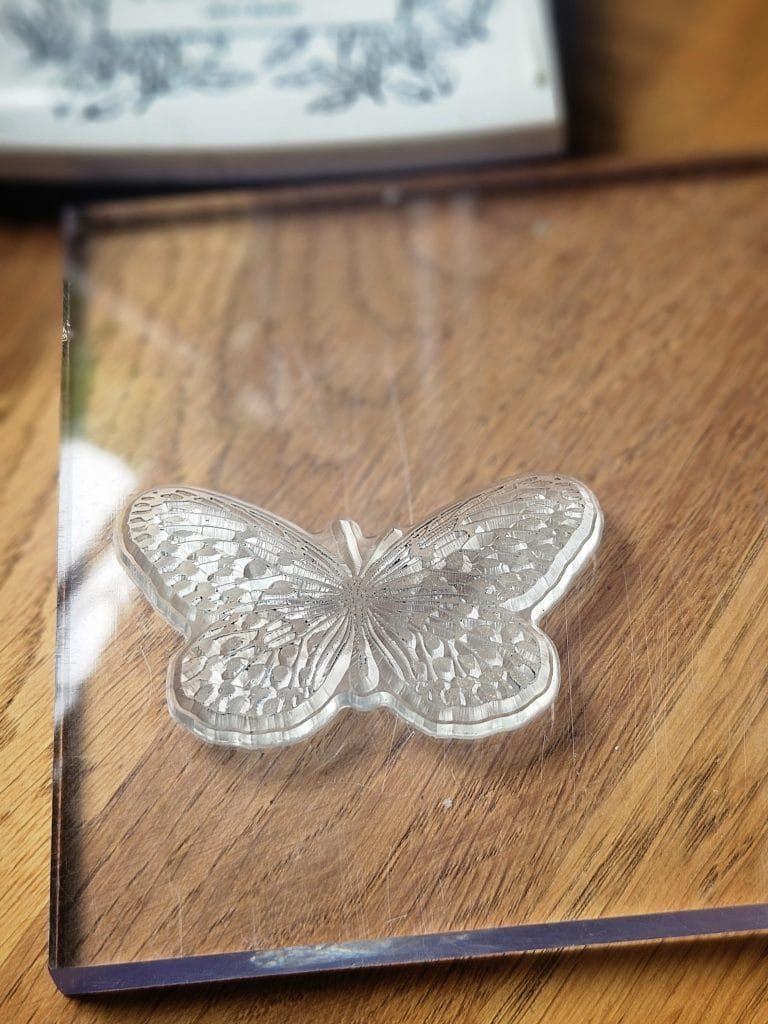
On raw polymer clay, however, my experience has been more mixed. I generally find the impressions less crisp and less deeply defined than those obtained with a rubber stamp.
Durability is another factor to consider. Depending on the manufacturing process, some clear stamps may become less effective or show signs of wear over time.
Finally, they are primarily intended for paper crafts. The available designs are often larger in scale than those commonly used in jewelry making, making it more difficult to find motifs that are well suited to polymer clay jewelry.
What About 3D-Printed Stamps?
3D printing has opened up many creative possibilities. It makes it easy to produce new designs quickly and is an excellent option for those who enjoy experimenting or working with a wide variety of patterns.
These 3D-printed “stamps” are primarily designed for creating texture in raw polymer clay, and they perform very well in that role. Depending on the material used, the clay can sometimes stick to the surface, but a little water or talcum powder is usually enough to prevent this and ensure a clean impression.
As for me, I prefer rubber. I appreciate the quality of the impressions it produces, its durability, and above all its versatility. The same stamp can be used to texture raw clay, but also to print designs onto baked clay using paint, inks, or other mediums. This versatility is better suited to the way I like to work and explore the creative possibilities of polymer clay.
Final Thoughts
Each material has its own advantages.
In the end, the choice of material matters less than how well it suits the purpose for which it is intended.
After many years of working with polymer clay, rubber remains my preferred choice for creating decorative textures. PMMA, on the other hand, has been accompanying me since 2018 in the creation of custom signature stamps, where its exceptional precision truly stands out.
In a future article, I’ll explain the differences between recessed and raised designs, and share some guidelines to help you choose the most suitable pattern for your project.