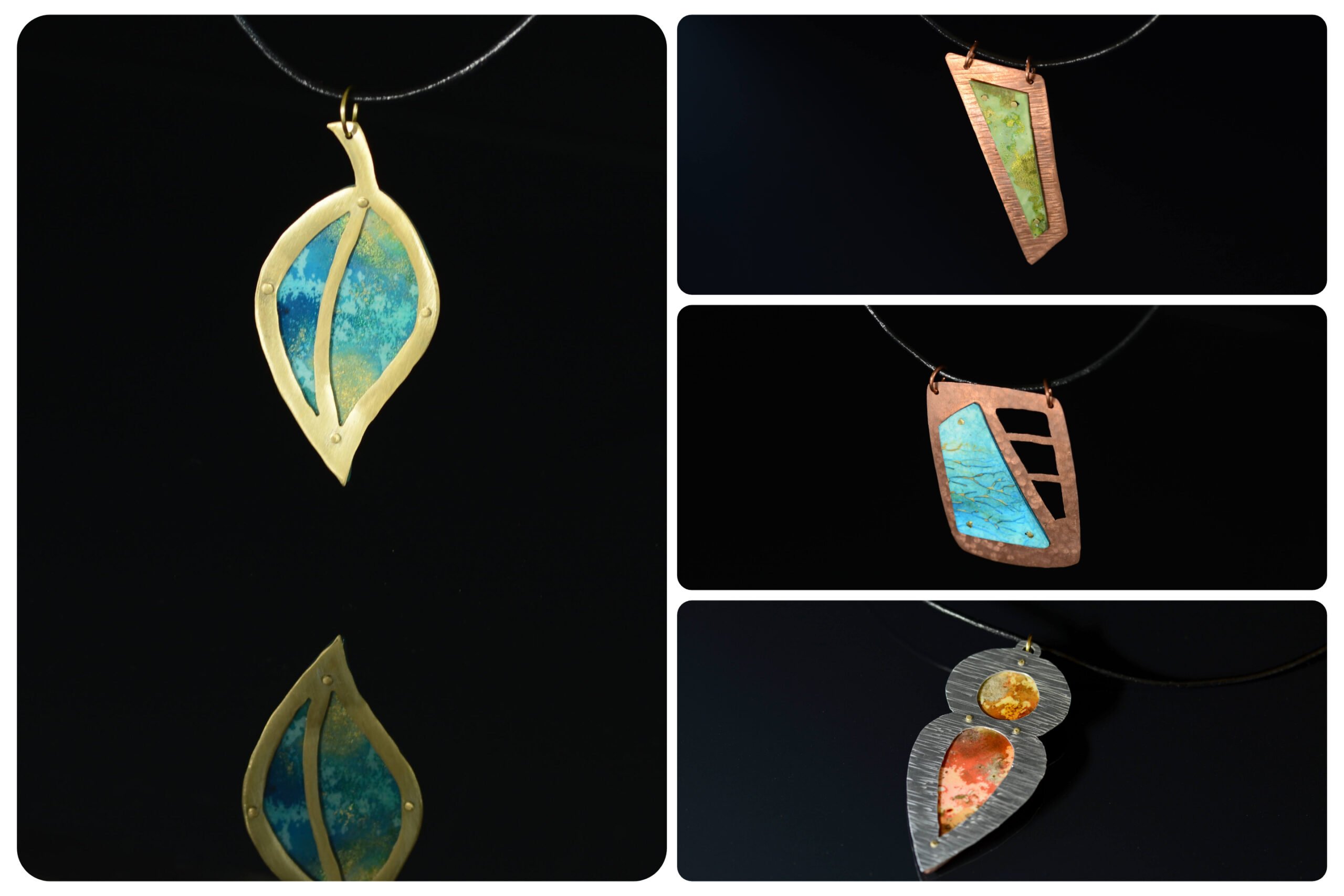
Jewelry display stand, metal and polymer clay
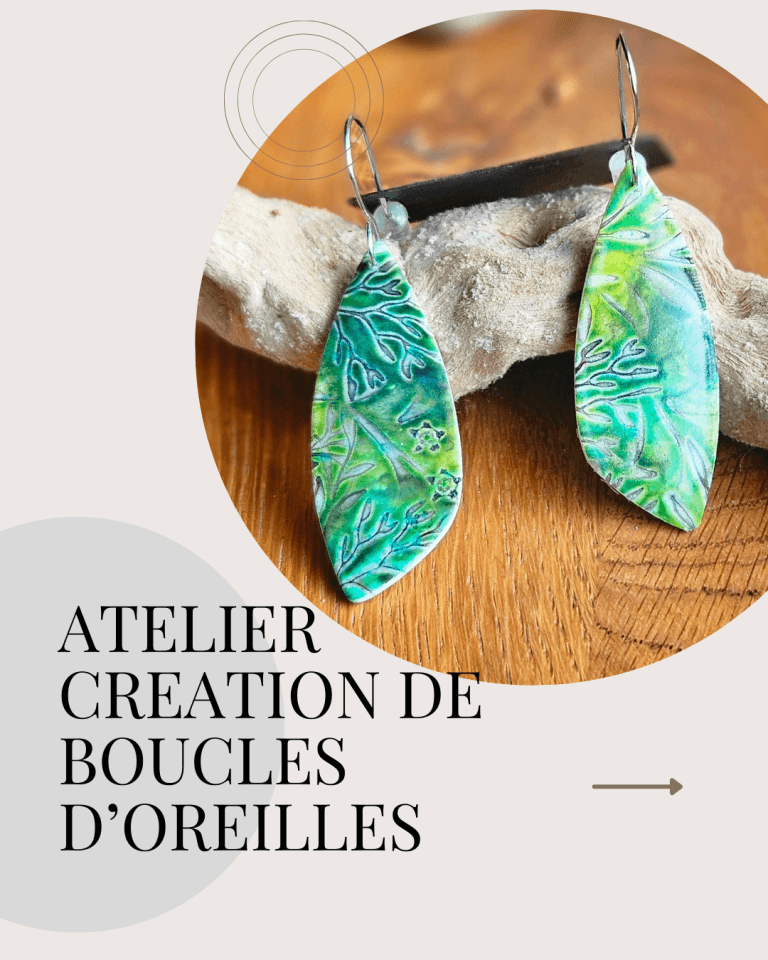
I am pleased to present a new workshop project to create jewellery that combines metal work and polymer clay.
I hesitated for a long time to offer this type of course until I started working with rivets (also called cold connections): fixing two materials together without the use of heat.
This was much easier to set up. No soldering, no torch and all the materials that go with it.
Rivets allow you to combine polymer clay and metal in a solid and elegant way. It is not necessary to have complex equipment to participate in this workshop (however, some basic tools are required).
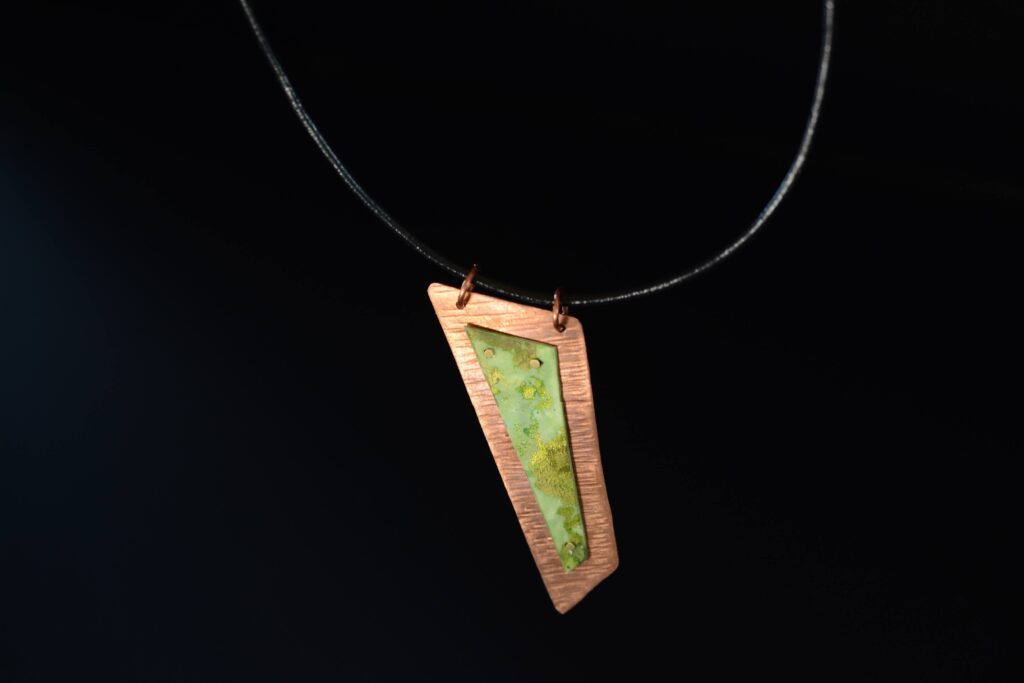
This workshop is for you if you want to discover a way to enhance your polymer clay work by combining it with another material: metal
During this course you will learn :
- What different metals can be used; which ones to avoid
- How to choose metal according to its properties
- How to use jewellers' saw frame and which blade to choose.
- How to easily transfer the shape you want to cut onto the metal.
- How to drill the metal to place rivets.
- How to give metal a neat finish and a brushed look.
- How to texture metal easily without distorting it.
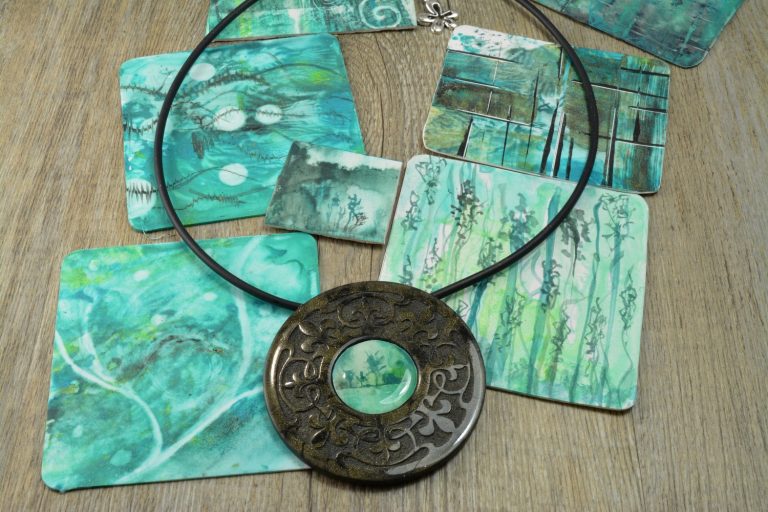
- To create a polymer clay decoration using an easy and fun surface technique for a colourful and vivid result. This technique will be used for the project worked on during the course but can easily be reused for any other creation in polymer clay.
- A few tips on how to develop this surface technique by combining it with other mixed media effects.
- To protect the piece of polymer clay in an effective and permanent way
- To firmly attach the polymer clay and the metal, without glue, thanks to rivets made of metal wire.
- Depending on the time we have, I hope to show you how to make your own clasps (on leather cord) to match the pendant and how to attach them without glue.
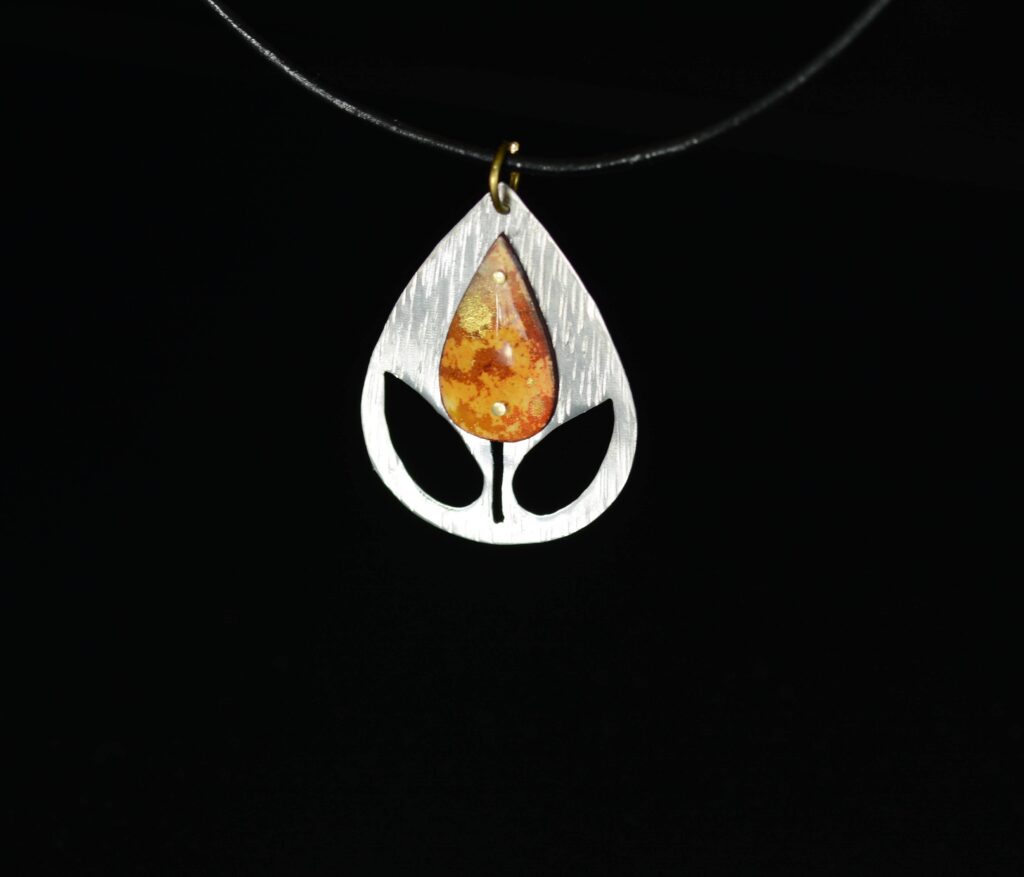
During the workshop, I provide :
The metal used
The saw blades
A bench pin (the support you use when cutting the metal)
Templates for cutting metal and polymer clay according to the model you will choose (Several designs will be provided with different levels of difficulty).
(Plusieurs modèles de pendentifs seront proposés avec différents niveaux de difficulté)
a written document summarising the essential stages of the project
I will also have some tools to lend.
A list of materials is provided (several weeks in advance)
This course is currently scheduled in France (ARRAS) in February 2022 and in Belgium(Wavre) in May 2022 but I would be happy to travel elsewhere to teach this project.


Si vous organisez un stage dans le Rhône, je suis partante ! Totale débutante lors de votre stage « pour aller plus loin » organisé à Savigny en octobre 2020, je suis devenue addict. Si vous avez une liste, pouvez vous me mettre dessus ? Merci. Avec mes meilleurs voeux pour 2022.
Bonjour Gisèle, Je suis contente que vous ayez poursuivi le travail de la pâte polymère. Je n’ai encore pas décidé de date pour Savigny. J’espère donner plus d’informations au printemps. Meilleurs vœux à vous 🙂
Lieu de stage. Ferez-vous un jour un stage à Tournai en Belgique ?
Je ne pense pas. A moins que quelqu’un se charge de l’organisation du stage. Pour rappel, je me déplace pour un groupe de minimum 12 personnes. De plus j’ai déjà 2 stages sur ce thème organisés à proximité.
Ca vous fait surement trop loin mais sachez que je vais essayer de programmer un stage en France ( Rhône) d’ici la fin 2022.
Bonjour Je veux progresser dans la création de bijoux et ´ polymère
Si vous faites un stage je suis de Mons mais peux me
Déplacer je vois plus haut une demande sur Tournai possible pour moi merci nathalie
Bonjour Nathalie, Malheureusement je suis venue animer un stage récemment en Belgique à Wavre. Du coup je ne projette pas de stage dans ce coin avant un bon moment. Le prochain stage programmé aura lieu en France dans la Drôme en octobre. Je travaille également pour proposer à nouveau des formations personnalisées individuelles dans mon atelier dans le Rhône. Je communiquerai bientôt sur ces nouvelles formations